
Why silver behaves differently than gold?
People often think silver is just “cheap gold.”
It isn’t.
Gold and silver may look similar on a price chart,
but they behave like two completely different assets.
Gold is about trust.
Silver is about trust plus industry.
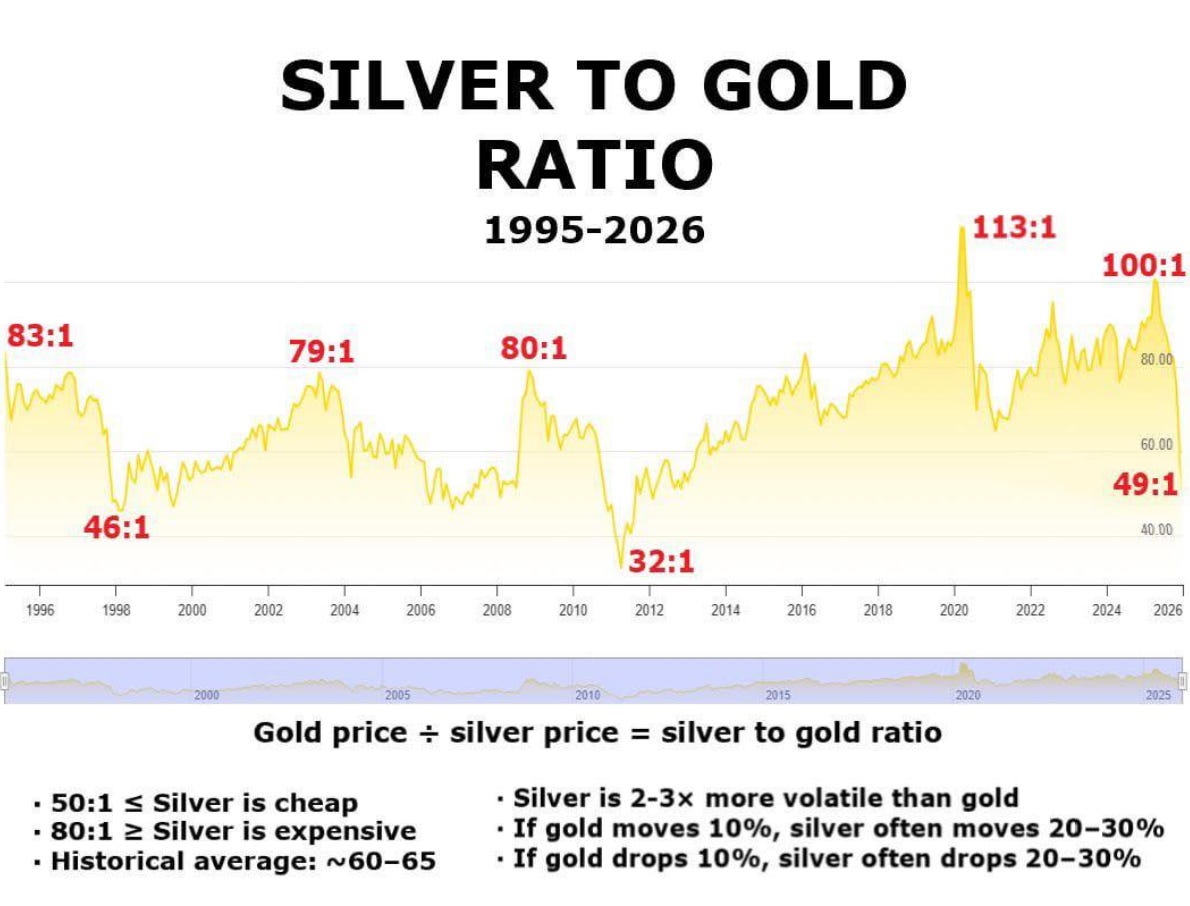
gold is mostly a financial asset
silver is half financial, half industrial
Gold is held mainly for:
reserves
hedging
wealth protection
Silver is different.
A large part of silver demand comes from industry:
solar panels
electronics
electric vehicles
medical equipment
So silver doesn’t just trade fear.
It trades factories.
That’s why silver can rally hard in growth cycles
and fall sharply in slowdowns.
Gold is insurance.
Silver is insurance with a business cycle attached.
silver is more volatile because it lives in two worlds
Gold has one job:
store of value.
Silver has two jobs:
store of value
industrial input
So silver reacts to two sets of headlines:
If inflation rises → silver can go up.
If manufacturing slows → silver can go down.
If risk-off hits → silver can drop harder than gold.
If growth rebounds → silver can outperform massively.
Silver is pulled in both directions.
That’s why it swings more.
look at 2008: silver crashed, gold held up
In 2008:
stocks collapsed
growth expectations collapsed
industrial demand fell sharply
Chart in words:
Silver fell over 50% during the crisis
Gold fell much less and recovered faster
Why?
Because in a recession, factories don’t need silver.
But investors still need gold.
Gold is held when the system breaks.
Silver is sold when growth breaks.
look at 2020: silver lagged, then exploded
During the Covid panic:
both metals dropped initially
gold recovered quickly
silver took longer
Then something interesting happened:
Once stimulus arrived and growth expectations returned,
silver surged.
Chart in words:
March 2020: Silver collapses
Late 2020: Silver rallies sharply
2021: Silver outperforms gold for stretches
Because silver was trading:
monetary stimulus
plusindustrial recovery
plusgreen energy demand
Silver is more cyclical.
It needs growth to really run.
silver is the metal of the energy transition
One of the biggest structural drivers today:
Silver is a key input in solar photovoltaics.
As the world builds:
solar capacity
EV infrastructure
electronics supply chains
industrial silver demand rises.
Gold doesn’t have this tailwind.
So silver has an embedded bet on:
electrification
energy transition capex
industrial expansion
That’s why silver sometimes behaves like a growth asset.
silver’s market is smaller, so moves get exaggerated
Silver is a much smaller market than gold.
That means:
fewer large holders
less liquidity
sharper price moves when flows change
When investors rush in, silver spikes.
When they rush out, silver collapses.
Gold is deep and stable.
Silver is thin and reactive.
That’s why silver rallies feel dramatic.
the gold-silver ratio tells you what regime you’re in
One of the simplest macro indicators:
Gold–Silver Ratio = gold price / silver price
High ratio → fear, deflation, slow growth
Low ratio → expansion, inflationary growth, risk-on
In crises, the ratio spikes (silver underperforms).
In recoveries, the ratio falls (silver catches up).
Silver is the metal that tells you whether growth is real.
how to think about silver vs gold in a portfolio
Gold is:
protection
stability hedge
monetary credibility hedge
Silver is:
cyclical upside
industrial transition bet
higher volatility hedge
Gold is the anchor.
Silver is the lever.
People who treat silver like gold get surprised.
Because silver is not gold.
It is gold plus growth.
what silver is signalling right now
Silver’s behaviour today reflects two forces:
monetary uncertainty (like gold)
industrial demand and green capex (unlike gold)
That makes it the more interesting metal in expansions,
and the more painful one in slowdowns.
Silver doesn’t just ask:
“Do you trust money?”
It asks:
“Do you trust growth too?”