
How GOLD 🟡 became so PRECIOUS
(And Why No One Actually “Decided” It Should Be)
If value is subjective, then here’s a strange question:
Why did humanity across continents, without coordination, end up trusting gold?
No global vote happened.
No empire invented it from scratch.
Yet gold became money for thousands of years.
So what really happened?
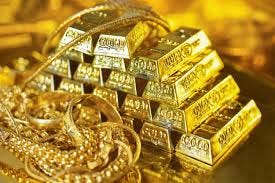
1. Gold didn’t start as money.
Early societies used:
cattle
grain
salt
shells
Money emerged from trade. People needed something that:
lasted
travelled
could be divided
couldn’t be easily faked
didn’t spoil
Gold slowly won this competition. Not because someone declared it superior.
But because it solved the “storage and settlement” problem better than most alternatives.
2. The paradox: Gold is useful because it’s mostly useless.
Copper is incredibly useful.
Silver is industrially important.
Gold?
Very little industrial utility historically.
And that is exactly why gold works as money.
Money should not be consumed.
It should not be destroyed in production.
It should not fluctuate wildly with industrial cycles.
Gold is chemically inert. It doesn’t rust. It doesn’t decay.
The same gold mined 2,000 years ago still exists.
That gives it something very rare: Monetary stability.
3. The real driver: Scarcity + Stock-to-Flow
The most important concept is this:
Gold has a very high stock-to-flow ratio.
That means:
The total gold already mined is huge compared to the amount mined each year.
Even if gold prices double, you cannot suddenly double supply.
Copper? You can increase mining quickly.
Silver? Production responds faster.
Gold supply barely moves. That makes it resistant to inflation.
Money needs that resistance.
4. Why gold beat silver
For centuries, both were money.
Silver was used for daily transactions.
Gold was used for large settlements.
But silver had a problem:
Its supply expanded dramatically when new mines were discovered, especially in the 16th century when Spain flooded Europe with American silver.
Prices rose. Silver lost stability.
Gold remained relatively scarce.
So gold became the higher-layer monetary asset.
5. Empires locked it in.
Once major trading empires adopted gold for settlement:
taxes were collected in it
debts were denominated in it
trade balances were cleared in it
Network effects made it dominant.
Money is not physics.
It is coordination.
Once enough people accept something, it becomes self-reinforcing.
6. The Gold Standard made it global.
By the 19th century, Britain, the world’s financial center, adopted the gold standard.
Other nations followed.
Gold became the anchor of international trade.
Paper currency was just a claim on gold.
Even after fiat replaced gold, central banks kept holding it.
Why?
Because gold is not someone else’s liability.
It is not a promise.
It is settlement without counterparty risk.
7. Gold today
Gold produces no cash flow.
It has no yield.
It creates nothing.
Yet central banks accumulate it.
Why?
Because gold is insurance against monetary disorder.
When trust in paper declines, gold rises.
Its value is not intrinsic.
It is systemic.
So…
Gold did not become valuable because kings chose it.
It became valuable because, over centuries, it proved to be:
scarce
durable
hard to inflate
globally accepted
politically neutral
Gold is not powerful because it shines.
It is powerful because it survived every monetary experiment humanity tried to replace it with.
👌👍
Another factor making gold so valuable is the mining challenge.
Technically Gold is one of the most abundant metals on the planet.
But unlike other metals, gold is not found in huge concentration at fixed places.
Rather it is spread across large rocks or lands in extremely tiny proportions.
So to produce a few grams of gold, miners have to refine over 50 tonnes of rocks leading to huge amounts of energy requirements, labour & equipment cost and wastage.
This creates rarity of a unique kind making gold so valuable.